Showing posts with label cookies. Show all posts

Orange Butter Cookies (1967) ★★★★


This recipe comes from a 1967 volume of Boys' Life, a magazine which has been printed by the Boy Scouts of America since 1911. It was printed in a column called Tim's Tips, which featured Christmas cookie recipes.

Original Recipe:


The Verdict:

I was nervous about these cookies! I had to re-read several times to make sure I wasn't missing a leavener. Oh - and as a disclaimer, I used a mixture of butter and margarine in my batter. The batter was very wet and sticky, even after being chilled for several hours. After chilling the dough, I baked a batch. They came out very pale and soft inside - almost cake-like. But the edges were very crisy and brown. I thought maybe it was because I had used a hot pan, but I got the same result when I re-baked with a cold pan and frozen cookie dough. Taste-wise, they're nice, but perhaps a tiny bit bland. The citrus zest was definitely there, though. I think they just needed a bit of vanilla. I thought they were good, but not great. I would eat them by choice, but I'm not sure I'd make this recipe again myself. Mr. Man really loved them, though!


Modernized Recipe:

(Adapted from Boys' Life, vol. 57 no. 12)

The original recipe is delicious and easy to follow. Add a splash of vanilla, if you fancy.

Lemon Biscuits (1861) ★★★★


Its funny, when I pick a recipe to make for this blog, I usually go by ingredients. Flour? Sugar? Butter? Eggs? Lemon? "This will be easy," I think to myself. And then I start the recipe. And read the instructions. And I end up thinking, "what the heck is going on here?!"

This recipe is weird. Why does it call for blending the butter with the flour, like a pastry? And after adding the eggs it looked so dry and crumbly, I was getting really worried. So I did a brief Google search and saw that some other people have tried this recipe without success....oh no.
But then I went back to my bowl and it had basically magically transformed into something that resembled a dough! Yay! I kneaded it a bit, dropped it onto a cookie sheet, put it in the oven, and crossed my fingers.


Original Recipe:

LEMON BISCUITS.
1743—INGREDIENTS.—1-1/4 lb. of flour, 3/4 lb. of loaf sugar, 6 oz. of fresh butter, 4 eggs, 1 oz. of lemon-peel, 2 dessertspoonfuls of lemon-juice.
Mode.—Rub the flour into the butter; stir in the pounded sugar and very finely-minced lemon-peel, and when these ingredients are thoroughly mixed, add the eggs, which should be previously well whisked, and the lemon-juice. Beat the mixture well for a minute or two, then drop it from a spoon on to a buttered tin, about 2 inches apart, as the cakes will spread when they get warm; place the tin in the oven, and bake the cakes of a pale brown from 15 to 20 minutes.
Time.—15 to 20 minutes. Average cost, 1s. 6d.
Seasonable at any time.

The Verdict:

Now, seeing as though we're looking at a British cookbook here, "biscuits" really means cookies. But there's no kind of leavening in the recipe at all. Mrs. Beeton states to drop the dough with a spoon, so I got some pretty lumpy cookies. Almost like coconut macaroons in look. They also didn't spread very much at all, despite what her recipe says.

These lemon biscuits are really quite beautiful. They bake up a very light color, and look like fluffy clouds. Taste-wise, they are just as delicate. The lemon flavour is light, but still present. I think I would personally prefer a touch more punch of lemon flavour, because the strongest flavour is just the sweetness from the sugar. Nevertheless, I would happily eat these cookies by choice, because they are good. I loved them best just out of them oven, when they're warm and soft and fluffy. Once they cool they become a bit dryer and denser.

Also! This makes a LOT of cookies! I got about 47 cookies. I would recommend halving the recipe, but I'm including the whole recipe below. Lastly, Mrs. Beeton's recipe calls for one ounce of "very finely-minced lemon-peel." I just assumed she meant lemon zest, but even zesting two lemons didn't weigh anything on my scale. I'm thinking she might have been referring to more of a candied peel. However, the lemon zest I used seemed to work just fine. And zesting requires no mincing!


Modernized Recipe:

(Adapted from The Book of Household Management)

1 1/2 pounds  (20 ounces) FLOUR
6 ounces UNSALTED BUTTER
3/4 pound (12 ounces) SUGAR
4 EGGS, beaten
1 ounce LEMON PEEL, or the ZEST of two LEMONS
2 teaspoons LEMON JUICE

1. Preheat oven to 350F. Line a cookie sheet with parchment paper.
2. Rub the butter into the flour as if to make a pastry dough. It should resemble wet sand.
3. Add the sugar and lemon peel to the flour and mix well. Add the beaten eggs and lemon juice and stir together until it forms a sticky dough (I used my hands to make sure everything was completely incorporated - you don't want chunks of egg). If the dough is still crumbly and isn't coming together, let it sit for a bit, to absorb the eggs.
4. Drop the dough by teaspoons onto the prepared cookie sheet. Bake for about 10-15 minutes (mine took 13).


Banana Drop Cookies (1941) ★★


A little while ago I bought some bananas on a whim (I usually don't buy them) and to my surprise Little Y was very excited about eating bananas....for two days. And then she refused to eat bananas and I had a bunch of very ripe bananas with no one to eat them. I had discovered this fun little banana pamphlet a while ago and saved it, so I thought this would be the perfect way to use up my ripe bananas.

This pamphlet was published in 1941 by the Home Economics Department of New York. There are some interesting recipes included, such as Ham Banana Rolls, Broiled Bananas and Bacon, and Banana Rice Savory. The illustrations are quite amusing, and I love how they include menus using each recipe.


Original Recipe:


The Verdict:
I was a bit disappointed by these cookies. The taste of the shortening is really prominent - too much so. If the recipe used butter instead I would probably give the recipe 4 stars, but like this it only gets 2. The texture is not like a cookie at all. These are basically like little banana breads - very light and fluffy (not a bad thing, just not like a  typical cookie). They are not very sweet either, even though I used extra ripe bananas. They are not bad, however. I think these would also be delicious with some chocolate chips mixed in - you can never go wrong with chocolate!


Modernized Recipe:
(Adapted from Bananas..how to serve them found at Curly Wurly)

The original recipe is very easy to follow. The only change I would make is to use at least half butter in place of half of the shortening. I haven't tested this, but I think it should work and would make the recipe quite edible.


ANZAC Biscuits (1927) ★★★★★

Today is ANZAC Day!
Okay, so two days ago I found out what the whole ANZAC business is about. For anyone else still in the dark, this acronym stands for Australian and New Zealand Army Corps. ANZAC Day in particular, is a nation-wide celebration in both countries, honouring those who fought at Gallipoli in the Ottoman Empire during World War One (although the day now serves as a more general memorial). ANZAC biscuits - cookies to us North American folk, but never call them that! - have come to play a crucial role in the celebration of this holiday, and are often used in fundraising efforts by the Royal New Zealand Returned Services' Association (RSA) and the Returned and Services League of Australia (RSL). These biscuits are very much a part of Australian society and culture. By preparing and eating these cookies, Australians and New Zealanders create a connection to ANZAC Day, often seen as the birth of the Australian nation, and to their fellow countrymen. This is one example of the scholar Benedict Anderson's theory of nations as imagined communities - members of a community imagine their peers participating in the same rituals as themselves, thus creating and perpetuating a specific culture. I'm getting a little bit scholarly on you here, but it is certainly a fascinating topic to consider!

However, the ANZAC biscuits which are baked today are quite different from the original recipe.
The original recipe is quite simple, so it is anyone's guess as to when it was "created". However, the earliest known use of the term "ANZAC" as a recipe is an advertisement for the 1915 copy of St. Andrew's Cookery Book, from Dunedin, New Zealand. But this recipe was for a cake, not biscuits. In Australia, a Sydney cookbook called War Chest Cookery Book included a recipe for Anzac Biscuits in 1917, but the ingredients do not correspond with the recipe known as ANZAC today. The 1917 recipe was contributed by an "Alice Anderson from "Oakdale" N. Sydney" and includes rice flour, spices, and eggs. Oddly enough, there is a recipe in War Chest Cookery Book which is extremely similar to ANZAC biscuit recipes published later, but in this case it is called Rolled Oats Biscuits. By 1921, Rolled Oats Biscuits finally became Anzac Crispies (published in the 9th edition of St. Andrew's Cookery Book) and in 1923 the recipe finally became Anzac Biscuits in Mrs H. W. Shaw's Six Hundred Tested Recipes. Coconut was introduced to the recipe in 1927. Therefore, the recipe can currently be traced back to New Zealand, where the recipe for Rolled Oats Biscuits was first published.

ANZAC biscuits reflect the circumstances in which they were created. The lack of eggs reflects food shortages during wartime years, specifically the lack of poultry. The hardness of the biscuits indicates that they were a good choice for baking and sending to soldiers abroad. While the origins of ANZAC biscuits certainly dates to the beginning of World War One (if not earlier, under a different name), it was not until after the war that they really began to take off as a cultural and culinary product.

I decided to go with the 1927 recipe, since this is the first time the recipe for ANZAC biscuits appeared as it is made today.


Original Recipe:
Take a quarter of a pound of butter and one tablespoon of golden syrup. Place in a saucepan and melt. Add two tablespoonsful of boiling water in which is dissolved one teaspoonful carbonate of soda. Add three-quarters of a breakfast cup of flour, one breakfast cup of sugar, one breakfast cup of desiccated coconut, one breakfast cup of oatina, and a few almonds finely chopped. Place in teaspoon quantities on a cold slide, and bake in a moderate oven. Leave on a tray for a few minutes to harden before removing from slide, but not too long. A knife slipped under each biscuit will readily remove.


The Verdict:
So for my first try, I used 1 teaspoon of baking soda. The cookies were really tasty and very chewy, but they spread a LOT and were a bit wonky. They were also a little greasy and the almonds didn't want to incorporate into the dough. Oh, and I really didn't want to go and buy a whole can of golden syrup when the recipe only called for 1 tablespoon, so I substituted 1/2 tablespoon honey and 1/2 tablespoon light corn syrup (I know, I know - sorry!). Despite any issues, these were very tasty. Mr. Man said that he was pleasantly surprised, as he doesn't like chewy cookies.
I decided to try again, this time with 1/2 teaspoon baking soda. I also used just a bit less than 1/4 lb of butter and went with a slightly different mixing method. This time the recipe turned out much better, but it was a tiny bit dry, so I think the full amount of butter should be used. This attempt tasted very similar to the first batch - chewy and delicious.


Modernized Recipe:
(Adapted from Terrace Tested Recipes, found at New Zealand Listener)
Yield: ~16 cookies

1/4 lb UNSALTED BUTTER
1 tablespoon GOLDEN SYRUP
2 tablespoons BOILING WATER
1/2 teaspoon BAKING SODA
3/4 cup FLOUR
1 cup SUGAR
1 cup DESICCATED COCONUT
1 cup ROLLED OATS
1/4 cup ALMONDS, chopped

1. Preheat the oven to 350F. Line a baking tray with parchment paper.
2. In a medium saucepan, melt the butter and golden syrup. In a mixing bowl, whisk together the flour, sugar, coconut, oats, and almonds until well combined.
3. In a small container, dissolve the baking soda in the boiling water and pour it into the melted butter. Stir, remove from heat, and pour into the dry ingredients. Mix well.
4. Take tablespoon-sized chunks of dough and roll into slightly flattened balls. Bake about 10 - 12 minutes.


-----
Sources


"Anzac Biscuit." Wikipedia. Wikimedia Foundation, 19 Apr. 2013. Web. 22 Apr. 2013. <http://en.wikipedia.org/wiki/Anzac_biscuit>.


Fleming, Kylie. "Kiwis or Us - Culinary Historian Allie Reynolds Traces Origins of Anzac Biscuits." The Australian. N.p., 20 Apr. 2013. Web. 22 Apr. 2013. <http://www.theaustralian.com.au/news/kiwis-or-us-culinary-historian-allie-reynolds-traces-origins-of-anzac-biscuits/story-e6frg6n6-1226624784496>.


Gofton, Allyson. "The Anzac Biscuit Myth." Allyson Gofton. N.p., 15 Apr. 2006. Web. 22 Apr. 2013. <http://www.allysongofton.co.nz/index.php/page/articles/pi_articleid/57>.


Rae, Fiona. "Anzac Biscuits 1994-2000." New Zealand Listener. N.p., 22 Apr. 2011. Web. 22 Apr. 2013. <http://www.listener.co.nz/from-our-archive/anzac-biscuits-1994-2000/>.


Supski, Sian. Anzac Biscuits - A Culinary Memorial. Humanities: Research and Graduate Studies, Australia at War and Peace. Curtin University, n.d. Web. 22 Apr. 2013. 
<http://research.humanities.curtin.edu.au/groups/awp/pdf/ANZAC_BISCUITS_G2015.pdf>.


Ginger Wafers/Marshmallow Sandwiches/Marshmallow Wafers (1917) ★★★★

Hi everyone! I have successfully completed another year of school. Well, maybe I shouldn't say that, as I haven't received my grades yet, but I'm confidant that I passed everything (I always do!).
Here's three recipes in one, to make up for the lack of posts recently. You know, I really love this cookbook, Better Meals for Less Money. Even though it was published in 1917 a lot of these recipes are still great, cheap dishes. Notice, for example, that this cookie recipe uses shortening instead of butter and brown sugar instead of white sugar. And there's no eggs! This could easily be a vegan recipe, with a few substitutions.


Original Recipe:

514.—GINGER WAFERS

½ cup shortening¼ teaspoon salt
1 cup brown sugar1¼ teaspoons ginger
2¼ cups bread flour½ cup milk
½ teaspoon soda
Cream shortening and sugar; sift soda, salt, and ginger with flour, and add alternately with milk; chill; roll thin on baking sheet; mark in squares, and bake in a moderate oven eight or ten minutes. Remove from pan while warm.

515.—MARSHMALLOW WAFERS

Arrange thin crackers or wafers on a baking sheet, place a marshmallow on each one, and bake in a moderate oven for a few minutes until marshmallows melt; into each one press half a nut meat, raisin, cherry, or a bit of candied fruit.

455.—MARSHMALLOW SANDWICHES

Toast marshmallows and press while hot between ginger snaps, vanilla wafers, or butter thins.


The Verdict:
Firstly, disclosure: I did not add the salt called for, I used all purpose flour, and I ended up not having much ginger (oops, haha), so I added some cinnamon as well, to increase the flavour.
This recipe is super simple to make; it literally took just minutes to whip together the dough, and there aren't many ingredients. The wafers themselves were apparently really good - Mr. Man actually freaked out and demanded to eat three of them while they were still cooling. I thought they were pretty good, but not as great as all that. They are really fluffy and kinda crumbly, so I wonder if it would have been any different with bread flour. I also think I made them way too thick - I just feel like they're supposed to be thin and crisper, rather than like a slice of thin cake. You know, because of the word "wafers" and all...
I felt that the marshmallows really improved these, plus it made them a little but more fun. Overall, I would probably eat this again, but only if I used thin, crispy wafers. It didn't really taste bad, but I feel like this is definitely a wartime treat, as more of a budget recipe than what someone would actually want to make if they had the ingredients.


Modernized Recipe:
(Adapted from Better Meals for Less Money)


1/2 cup SHORTENING
1 cup BROWN SUGAR
2 1/4 cups FLOUR
1/2 teaspoon BAKING SODA
1 1/4 teaspoons GINGER, ground
1/2 cup MILK
MARSHMALLOWS
NUTS, RAISINS, CHERRIES, CANDIED FRUIT

1. In a medium mixing bowl, cream the shortening and sugar. In a separate bowl, whisk together the flour, baking soda, and ginger. Add the flour mixture and milk to the creamed shortening, alternating. Mix until well-combined and let chill for a little while, until it is easy to work with.
2. Preheat oven to 350F. Line a baking sheet with parchment paper and roll out the cookie dough onto the baking sheet (either roll it out and transfer or do it directly on the baking sheet). Score the dough into squares. Bake for 8 - 10 minutes.
3. When the wafers are baked and cooled, make either marshmallow wafers or marshmallow sandwiches, following the directions above.


Cocoanut Dainties (1931) ★★★★


I found this recipe at The Old Foodie. I liked it because it looked super simple and I also thought it would be a good treat for Little Y, who loves coconut. They're also pretty cheap to make, with only 3 ingredients.

Original Recipe:
Cocoanut Dainties.

Here is some cooking which a small child could do. The ingredients needed are:-

Four table-spoonfuls of sugar, 8 tablespoonfuls of desiccated cocoanut, and the whites of two eggs. Beat the whites of the eggs to a froth, add the sugar, and beat well again. Then stir in in the cocoanut.

Drop teaspoonfuls of this mixture on to a greased slide, and bake about 10 or 15 minutes in a moderate oven.

(A Parrot Card is awarded to Jean Douglas, Coast Road, Mirboo [?] North, Gippsland.)


The Verdict:
Not bad. I'm not a huge fan of coconut either, but I don't mind these. They did turn out pretty chewy, and I was hoping for more of a crunchy meringue, but still good (I realized as I was writing this up that I accidentally used half the amount of sugar. I didn't even notice, however, I wonder if that had anything to do with the texture.)! Perhaps they could benefit from a splash of vanilla, but otherwise they're fine as is. They're a great option for when you'd like a sweet treat but are lazy. It took minutes to whip these up and the great thing is that they don't spread, so you could probably even fit all of them on one baking sheet. They are best eaten the day of, because otherwise they tend to get sticky, even in this dry winter air.
Yield: 16 dainties


Modernized Recipe:
(Adapted from the Children's pages of The Argus, December 12, 1931, found at The Old Foodie)

2 EGG WHITES
4 tablespoons SUGAR
8 tablespoons DESICCATED COCONUT
1 teaspoon VANILLA EXTRACT (optional)

1. Preheat oven to 350F. Line a cookie sheet with parchment paper.
2. In a large bowl, beat the egg whites until frothy. Add the sugar and beat until stiff peaks form. Gently fold in the coconut.
3. Drop teaspoonfuls of the mixture on the prepared cookie sheet. Bake about 10 or 15 minutes until the tips become golden brown. Let cool and store in a well-sealed container.


Sint Nickolaas Koekjes (Speculaas) (1937) ★★★★★

Ginger Bread by Anton Pieck (1895 - 1987)
My maternal grandparents emigrated to North America after WWII. As a result, I have a long-time love of Speculaas - and not just at Christmastime! And imagine my surprise when the flavour of this traditional cookie went mainstream over the past year, with the cult following of speculoos spread/biscoff cookie butter.

Speculaas are something like a Dutch answer to gingerbread (which was super popular in the British Isles). Like gingerbread, speculaas can be made different ways: thin and hard, thick and bready, or filled with almond paste. While the terms speculaas and speculoos are often considered fairly interchangeable, there is a difference. Add in "biscoff" and the whole thing just gets downright confusing. Speculaas is a Dutch word for the cookie, which is usually of the thicker, bready type, more like (non-crispy) gingerbread. Speculoos is the Belgian word and tends to be a thin, hard cookie with less spice. Biscoff (biscuit + coffee) is the name that speculoos are sold under in North America. Therefore speculoos = biscoff, which do not = speculaas.

Although the texture may be different, the flavour of speculaas appears in many lowland European countries, especially in holiday sweets. The etymology of the word "speculaas" is not definite, but the two most popular theories are that it is derived from the word "speculum" or "specie". Speculum ("mirror") would refer to the mirror image of the stamps or molds, while specie would connote a "spiced" cake. Two other options are the  Latin word "speculator" to refer to St. Nicholas (Sint Nickolaas), "he who sees everything", or "specerij", which again, means "spice". In Germany they are known as spekulatius. There is also a local variety from Hasselt, Belgium, called speculation, which was licensed in 1870.

The cookie itself dates back to at least the Middle Ages, when cinnamon, nutmeg, and cloves were commonly used and foods such as gingerbread were popular. They were certainly being baked by the 15th century, when couples in love would express their desires through the gift giving of speculaas, shaped as humans or even in a representation of St. Nicholas himself. While originally based in religious iconography, nowadays speculaas come in a variety of shapes, including elephants, horses, ships, farmhouses, windmills, chickens, trees, birds, etc. Prior to around 1850, speculaas were made from rye flour and honey, resulting in a very hard cookie which could only be eaten when softened.

In the Netherlands, the feast of St. Nickolaas (Sinterklaas) is celebrated on December 5th, so hence the date for this post. 

I found this specific recipe on a website for a Dutch historical village in Pella, Iowa, which was founded in the 19th century by Dutch immigrants. The recipe comes from a 1937 community cookbook which was full of ethnic recipes (as community cookbooks often are). Perhaps this is why the recipe specifies that these are "Sint Nickolaas Koekjes". Any Dutch person would certainly know the tradition of "speculaas", so the recipe title must indicate that the recipe and hence the cookbook were for a broader audience. As a disclaimer, I do not know if any revisions were made by the website, so the recipe may not have been originally written in this form. However, given the sparse instructions, I don't think many - if any - changes have been made.


Original Recipe:
Dutch Santa Claus Cookies
Sint Nickolaas Koekjes (Speculaas)

10 oz. butter
1 egg
10 oz. brown and white sugar mixed
2 t. cinnamon
1 t. nutmeg
1/2 t. cloves
1 lb. flour
1 t. soda dissolved in 2 T. sour milk

Mix—form into ball—chill.
Slice thin and bake.

The Verdict:
I was curious to see how this would work out, because normally speculaas (at least today) contain far more spices, including ginger, star anise, coriander, and white pepper. There are also no directions for mixing, so I followed the usual standard for making cookies. However, I have seen some recipes which follow the steps for making pastry: cut the butter into the flour and then adding the other ingredients.
The cookies were delicious, although a tiny bit bland spice-wise. If you like a real punch of spice, this is not the cookie. Or it could be, just add more spices. Ginger would really help, I think. Nevertheless, they are yummy as is! I would certainly make and eat these again happily. Mr. Man enjoyed them as well. They are soft and delicious right out of the oven, but harden up just a bit once cooled. They're also not super sweet, which is nice because it means you can eat five and still feel okay. Not that I tried...
Yield was 30 cookies, slightly smaller than my palm.

Modernized Recipe:
(Adapted from Genuine Holland Recipes, found at Pella Tulip Time)

10 ounces UNSALTED BUTTER
5 ounces BROWN SUGAR
5 ounces WHITE SUGAR
1 EGG
2 teaspoons CINNAMON
1 teaspoon NUTMEG
1/2 teaspoon CLOVES
1 teaspoon BAKING SODA
2 tablespoons BUTTERMILK
1 pound FLOUR

1. In a large bowl, beat together the butter and sugar. Mix in the egg. Add the spices.
2. Dissolve the baking soda in the buttermilk (or use regular milk with some lemon juice to make it sour) and stir into the dough. Blend in the flour and knead until well-combined. You may need extra flour. It should not stick to your hands.
3. Form the dough into a ball or a log and refrigerate overnight. I would suggest the log, otherwise you're going to have to wait for an hour for the dough to come to room temperature to roll by hand.
4. To bake the cookies, preheat oven to 350F. Slice into small rounds or roll into balls (or use a speculaas mold if you happen to have one). Bake on a cookie sheet for about 14 minutes.

-----
Sources

Muusers, Christianne. "Speculaas with Rich Almond Stuffing." Coquinaria. 29 Oct. 2004. Web. 03 Dec. 2012. <http://www.coquinaria.nl/english/recipes/speculaas.htm>.


"SPECULAAS FROM HASSELT." Grandma's Design | Recipes. European Commission. Web. 03 Dec. 2012. <http://www.grandmasdesign.com/media.php?recipes=NTAwMjA=>.

"Speculoos." Wikipedia. Wikimedia Foundation, 28 Nov. 2012. Web. 03 Dec. 2012. <http://en.wikipedia.org/wiki/Speculoos>.

"Vermeiren Speculoos." Vermeiren Speculoos. 2012. Web. 03 Dec. 2012. <http://www.vermeirenprinceps.be/index.php?prodid=>.

4 Weeks of Yuletide: Recipe Round-up


The blogs I have listed on my sidebar to the right have some great holiday recipes. I've saved you the hassle by going through and compiling them all here in one post. Some of my upcoming yuletide recipe posts will also be from this list.

Hey, My Mom Used to Make That!
For a Perfect Egg Nog (1936)
Old Time Fruit Cake (Undated)
No-Baking Festive Fruit Cake (1957)
JELL-O Gelatin Jigglers (1980s)
Butterscotch Rolled Cookies (Undated)
Holiday Chocolate Butter Cookies (1992)
Butterscotch Yule Log (1967)
Irresistible Peanut Butter Cookies (1992)
Hot Dr Pepper (1964)
Campbelled Eggs (Undated)
Midori Melon Liqueur Cocktails (1979)
Jellied Cranberry Salad/Cranberry Noel Dessert/Cranberry Orange Relish (Undated)
Bacardi Rum Cake (1992)
Domino Gingerbread Men (1992)
Le Punch (1979)

Vintage Ads (You may need to join the group to see some entries)
Fruit Cocktail Eggnog Pie (1956?)
Trim-a-Tree Dip (1967)
"Philly" Pate (Undated)
Borden's Egg Nog (1951)
Atora's Tough Guy Christmas Pudding (1961)

Dinner Is Served 1972
Holiday Glogg (1973)

Historic Cookery
New Year's Cake (1796)
Twelfth Cakes (1801)

The Old Foodie
Vintage Christmas Recipes (1553 - 1944)
Christmas Charlotte Russe/Bethlehems (1912)
The Christmas Pudding (1852)
A Chilly Christmas Dinner/Potato Hash (1866)
Christmas Bread (1891/1897)
A Bill of Fare for Christmas Day (1674)
Christmas Guests: Menus for Three Days (1930)/Watercress and Celery Stuffing (1956)
Mince Pies (1868)/Roast Goose (1887)
Plum Pudding (1931)
Creole Coffee Pudding (1944)
Christmas Jelly (1904)
Christmas Ice-Cream Pudding (1951)/Christmas Trees on Ice Cream (1952)
Plum Pudding Glace (1879)
Christmas Cakes for Good Children (1870)
Christmas Ham Recipes (1882 - 1953)
Egg Nogg (1862)

Four Pounds Flour
Another Christmas Cookey (1796)
Charles Dicken's Punch (1847)
A Dollar Christmas Dinner (1878)

Gram's Recipe Box
Vintage Holiday Recipes

The Mid-Century Menu
Snowman Cut-up Cake (1975)
Party Cheese Ball (1971)
Dear Santa Cake (1956)
Pork Cake (1950s)
Chill-and-Bake Cranberry Cake (1961)
Cheezy Beans and Onions/Creamy Pumpkin Pie/Jiffy Quick Dressing/Snappy Sweet Potatoes (1967)
Chocolate Marshmallow Punch (1971)

Researching Food History - Cooking and Dining
Black Cake (1823)/Fruit Cake (1840)/Christmas cake (1919)/Black Cake (1845)

Vintage Recipe Cards
Crispy Gingerbread Cookies (1984)
Candy Cane Cookies (1971)
White Fruitcake (1973)
Quick Holiday Fruitcake (1971)
Christmas Confections (1971)
Country Christmas Bread (1984)
Christmas Cake Cookies (1973)
Steamed Holiday Pudding (1971)
Party Cheese Ball (1973)
Shrimp Christmas Tree/Eggnog/Eggnog Cooler (1977)
Outback Ice Christmas Pudding(1972)
Sleigh Cake (1967)
Santas Whiskers (1979)
Christmas Candle Salad (1958)


A Butter Drop (1796) ★★★

I had some time on my hands so I thought I would make a quick cookie recipe to share with you all!
I wanted to do something a little older, since I've been stuck in the 20th century for a while. Actually, I found this kind of interesting. The newer recipes seem to appeal more to my modern tastes. Even just making these recipes really demonstrates how our tastes and ingredients have transformed over the centuries.

Anyway, this recipe is from the 1796 cookbook by Amelia Simmons. Her cookbook is recognized as the first known cookbook published in America (as opposed to imported from Europe). Additionally, the book enjoyed immense popularity and was printed in at least 13 different editions, not to mention the plagiarized versions which were also published. What is interesting to note is that the book was written only a few years after the end of The American Revolution. Clearly this cookbook reflected the creation of the independent American identity. Also - in the spirit of Thanksgiving - American Cookery contains the first known recipe for turkey with cranberries.

Although the recipe doesn't include anything in the way of instructions, there is a very similar recipe in the cookbook for Butter Drop Do: "No. 3. Rub one quarter of a pound butter, one pound sugar, sprinkled with mace, into one pound and a quarter flour, add four eggs, one glass rose water, bake as No. 1."


Original Recipe:
A Butter Drop.
Four yolks, two whites, one pound flour, a quarter of a pound butter, one pound sugar, two spoons rose water, a little mace, baked in tin pans.

The Verdict:
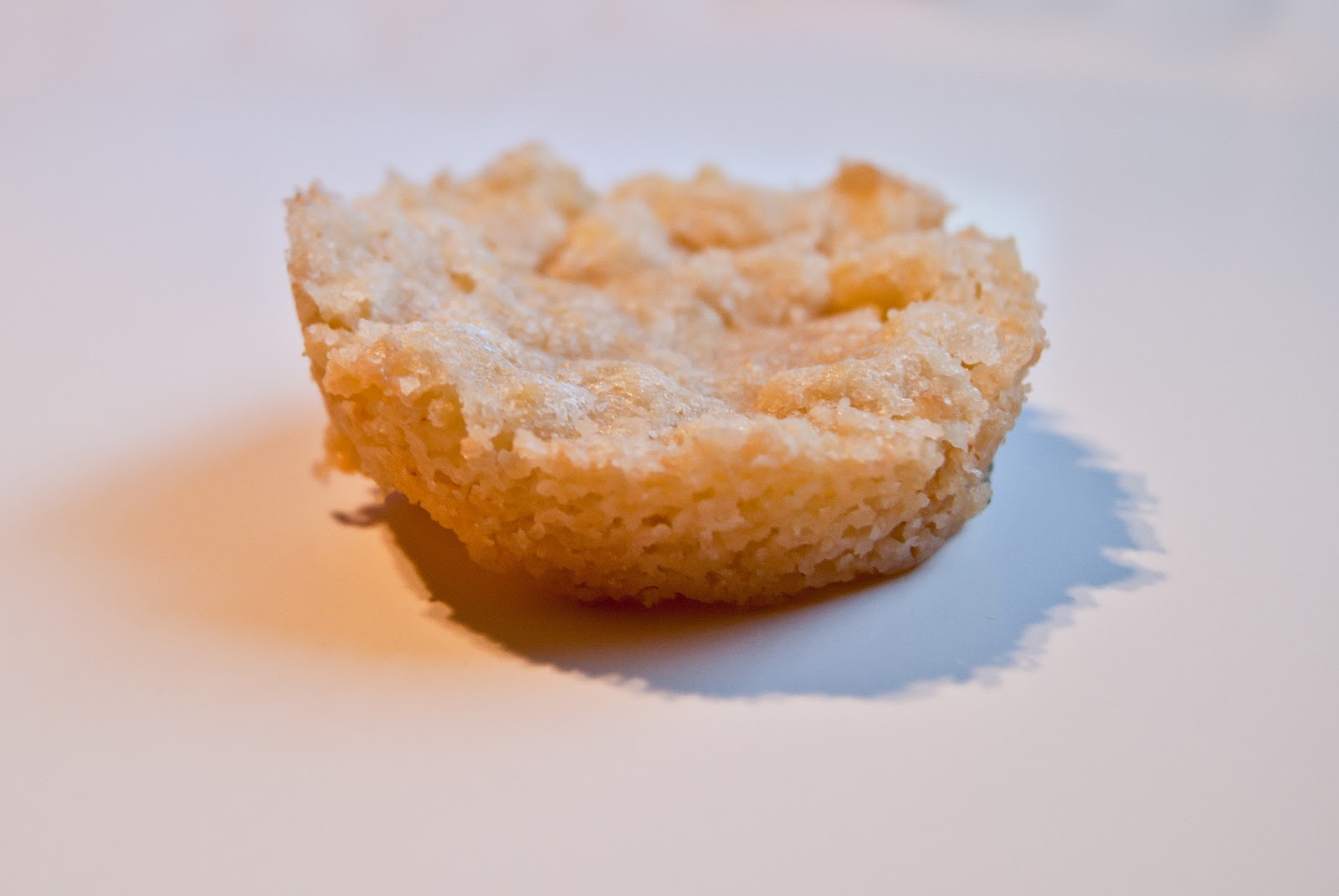
Not bad. I'm not a huge fan of rosewater, so at first I didn't like these much. Also, the mace reminded me too much of green beans (my family eats nutmeg on beans). Mr. Man said he loved them, though, and Little Y ate hers without a complaint. The cakes themselves reminded me of boterkoek, a traditional Dutch recipe that my mom always made. The connection - butter - is obvious. Despite the flavourings, I did enjoy these little cakes. I would probably even make these again, just with different flavourings (lemon and ginger? almond?). Oh, and I halved the recipe and got 16 small cakes.


Modernized Recipe:
(Adapted from American Cookery)

4 EGG YOLKS
2 EGG WHITES
1 pound FLOUR
1/4 pound UNSALTED BUTTER
1 pound SUGAR
2 teaspoons ROSE WATER
A pinch of MACE

1. Preheat oven to 350F. Liberally butter a muffin tin or line a baking sheet with parchment paper.
2. In a large bowl, rub together the sugar, mace, and butter. Add the flour, eggs, and rose water.
3. Take about 2 tablespoons of dough and roll it into a ball. Pat it into a muffin cup or flatten it on the cookie sheet. Bake for 10 - 15 minutes, or until lightly brown. They will be very soft, so do not remove until cooled.


Cocoa Cookies (1921) ★★★★★

With this quick and simple recipe, you can have warm cookies straight out of the oven in a jiffy.


Original Recipe:
4 tablespoons shortening
1 cup sugar
1/4 cup milk
1 egg
2 cups flour
3 teaspoons baking powder
1/4 teaspoon salt
1/2 cup cocoa

Cream shortening and sugar together.
Add milk and beaten egg; mix well.
Sift flour, baking powder, cocoa and salt together and add.
Roll out 1/4-inch thick on floured board; cut with cookie cutter.
Bake in hot oven about 12 minutes.


The Verdict:
These cookies were soooo good! They were perfectly cooked, soft, fluffy, and delicious (even after they cooled). The chocolate flavour is mild, but still tasty. They're also fairly cheap, considering the recipe uses cocoa powder instead of chocolate, 1 egg, and only 1/4 cup of fat. And by the way, I used butter instead of shortening and they turned out fine. Rather than using cookie cutters, I rolled the dough into balls in my hands. The dough was too soft to roll, but I think a short time in the fridge would probably fix that. Anyway, it's just easier and cleaner to use my hands. I think the yield was something like 18 cookies, but I can't be sure because a bunch were gobbled up by Mr. Man while I was out of the kitchen. Little Y enjoyed hers too.

Modernized Recipe:
(Adapted from The New Dr. Price Cookbook)

The original recipe is easy to follow. Bake at 400F for about 10 minutes.


Hurry Ups (1919) ★★★

This recipe was under "Cookies", but it seemed sort of breakfasty to me, so I included it under that category as well ;)
I thought the name was kind of unique, but apparently it's truthful, because these took maybe 20 minutes for prep and baking!


Original Recipe:

The Verdict:
SO SALTY. I don't know why on earth this recipe calls for 1 teaspoon of salt, but it is way too much! My cookies were totally ruined :(. I think without the salt (or with maybe a tiiiny pinch), these would have been delicious, so I was very sad. Anyway, since it's just one ingredient, I'll disregard it and give the recipe three stars, because I truely think these would have been good.

Modernized Recipe:
(Adapted from The International Jewish Cook Book)

1 cup FLOUR, sifted
2 teaspoons BAKING POWDER
A pinch of SALT
1 cup ROLLED OATS
1 tablespoon SUGAR
2 tablespoons BUTTER, melted
1/2 cup MILK
RAISINS or DATES
BUTTER or HONEY or MAPLE SUGAR

1. Preheat the oven to 425F. Line a cookie sheet with parchment paper.
2. In a medium bowl, whisk together the flour, baking powder, salt, oats, and sugar.
3. Stir in the melted butter and the milk until well combined.
4. Using a teaspoon, your hands, or a small ice cream scoop, make small, even balls. These don't spread at all, so you can fit quite a few on one sheet. Gently flatten the tops with a fork or the back of the spoon and press in the raisins or dates. Makes about 15 small cookies.
5. Bake cookies for 5 - 7 minutes. Serve with butter, honey, or maple sugar.


Snippodoodles (1911) ★★

Dear Rufus, you confuse me.
I don't understand why this recipe neglects to list baking powder in the ingredients, never mind that there isn't even a measurement included. And why do you say "eggs well beaten" when in the ingredients it says ONE egg?
Also, I got scolded by the Man after making these to "stop making that nasty ancient food!" I think I'd better find a really tasty recipe...

SNIPPODOODLES --One cup of sugar, one tablespoon of butter, one-half cup of milk, one egg, one cup of flour, one teaspoon of cinnamon. Cream the butter, add the sugar, then the eggs well beaten, then the flour, baking powder and cinnamon, sifted together, and the milk. Spread very thin on the tin sheet and bake. When nearly done sprinkle with sugar; when brown remove from the oven, cut into squares and remove quickly with a knife. They should be thin and crispy.


The Verdict:
These cookies kind of reminded me of hard tack. As in they are crispy and rather bland. I think more cinnamon in the batter would be yummier. Also, the sugar on top makes these edible since the cookie itself is so tasteless. These cookies didn't get thin and crispy, but I think that is my fault on account of 1) I have a small oven and I use a smaller than normal baking sheet and 2) I spread the batter unevenly. It's tough to gauge how even it is on a baking sheet so maybe it would work better in a glass baking dish. You want these really thin and crispy, not thick and chewy like mine.

Modernized Recipe:
(Adapted from Good Things to Eat, As Suggested By Rufus)

1 tablespoon BUTTER
1 cup SUGAR + extra
1 EGG
1 cup FLOUR
1 teaspoon CINNAMON
1/2 teaspoon BAKING POWDER
1/2 cup MILK

1. Preheat oven to 350F. Cream the butter with the sugar and add the egg.
2. Thoroughly mix in the flour, cinnamon, and baking powder. Add the milk last.
3. Spread a thin layer of the batter on a piece of parchment paper on a cookie sheet or in a baking pan. Make sure the layer is even.
4. When cookies are nearly done, sprinkle sugar on top.
5. Bake until crispy and browned (mine took ~20 minutes, but were too thick).